HomeCategoriesSupplementsVitamin C Supplements
Supplements · Vitamins, minerals, nootropics & protein

The best vitamin c supplements of 2026

The best vitamin C supplements, ranked on the one thing that separates otherwise-identical bottles of a cheap, well-understood nutrient: whether an independent body has checked, at the exact pack you buy, that the bottle holds what the label says.

At these doses the milligrams do not sort these supplements. Every one clears the NIH Recommended Dietary Allowance of 90 mg for men and 75 mg for women, and none comes near the 2,000 mg a day the NIH sets as the adult upper limit. What sorts them is verification. Nature Made is listed in USP Verified and Thorne in NSF/ANSI 173, each matched to the exact pack we link. NOW and Garden of Life we checked against both registers and did not find, so they rank below on the one axis a bottle of vitamin C can actually be judged on.

Last updated
July 18, 2026
How we rank: published specs, third-party certifications, and what verified buyers report.
§ 01 · Top 4 Rankings

Our top 4 picks for vitamin c supplements

As an Amazon Associate I earn from qualifying purchases.

#1
EDITOR'S CHOICE
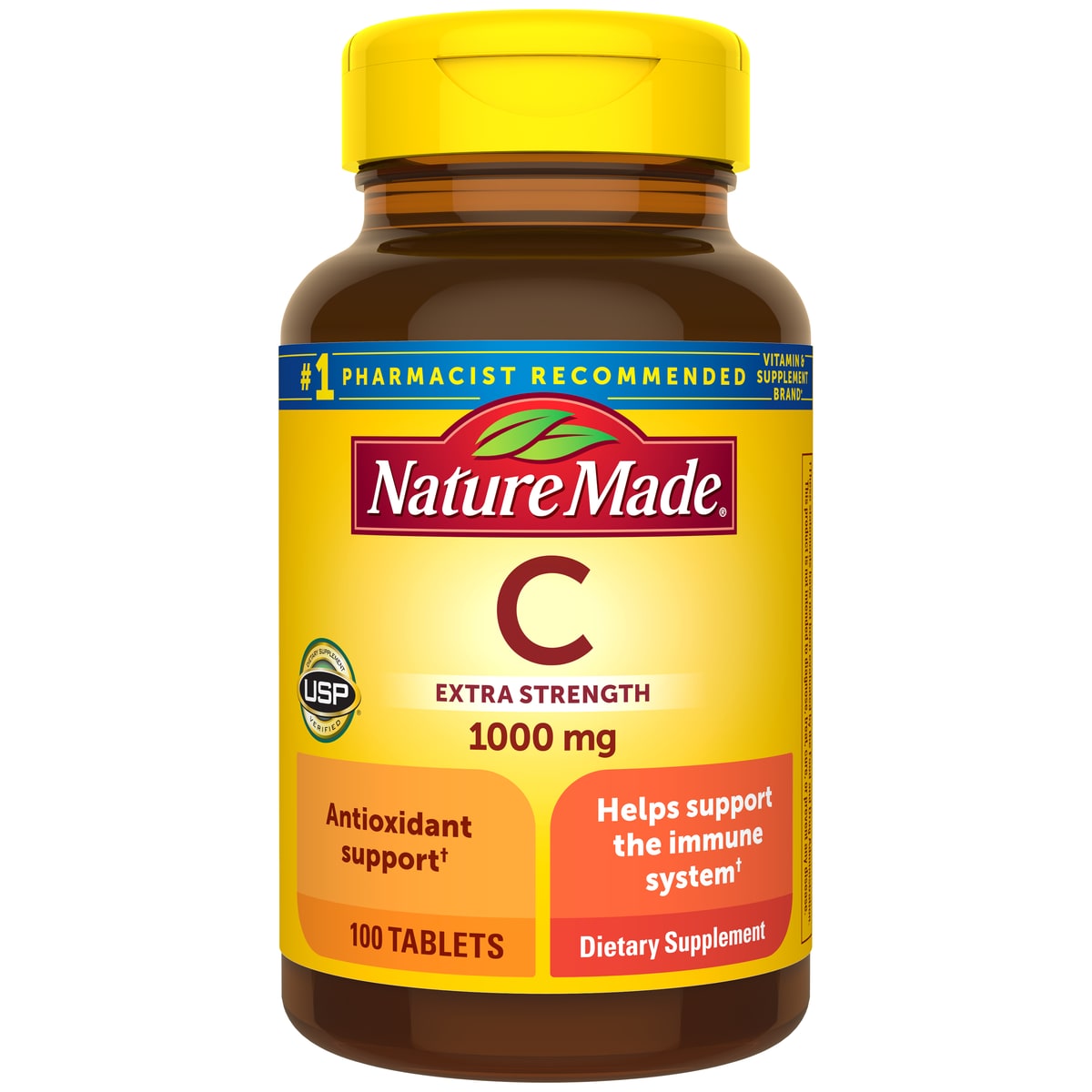
Nature Made Extra Strength Vitamin C 1000 mg
Zoom
Nature Made

Nature Made Extra Strength Vitamin C 1000 mg

9.3/10JellyReviews Score

The one to buy for most people. It is the cheapest kind of vitamin C there is, plain ascorbic acid, and it carries the strongest verification on this page. USP Verified checks that the tablet holds the 1,000 mg it claims, that it is free of specified contaminants, and that it dissolves. The pack matches the register exactly, because the tablet we link carries item model number 1489, the SKU USP's own listing points to, and you can add that pack to a cart from the Nature Made store. It ranks first because a drugstore bottle carrying USP tells you more about what you are swallowing than a premium label with no register behind it.

Pros
1,000 mg of vitamin C in one tablet as plain ascorbic acid, the cheapest and most studied form there is
Listed in USP Verified, the mark that checks a supplement holds the amount on its label, is free of specified contaminants, and dissolves
The pack matches the register: the tablet we link carries item model number 1489, the SKU USP's own listing resolves to
Sold as a standalone under the Nature Made store on Amazon, so you buy the exact verified pack in one step
Cons
A 1,000 mg tablet is more than ten times the RDA; if plain ascorbic acid upsets your stomach, a buffered or food-based form may sit better
No rose hips or bioflavonoids, if you specifically want them in the tablet
Where to buy
Amazon
Check Price
We may earn a commission from this link.
#2
NSF/ANSI 173
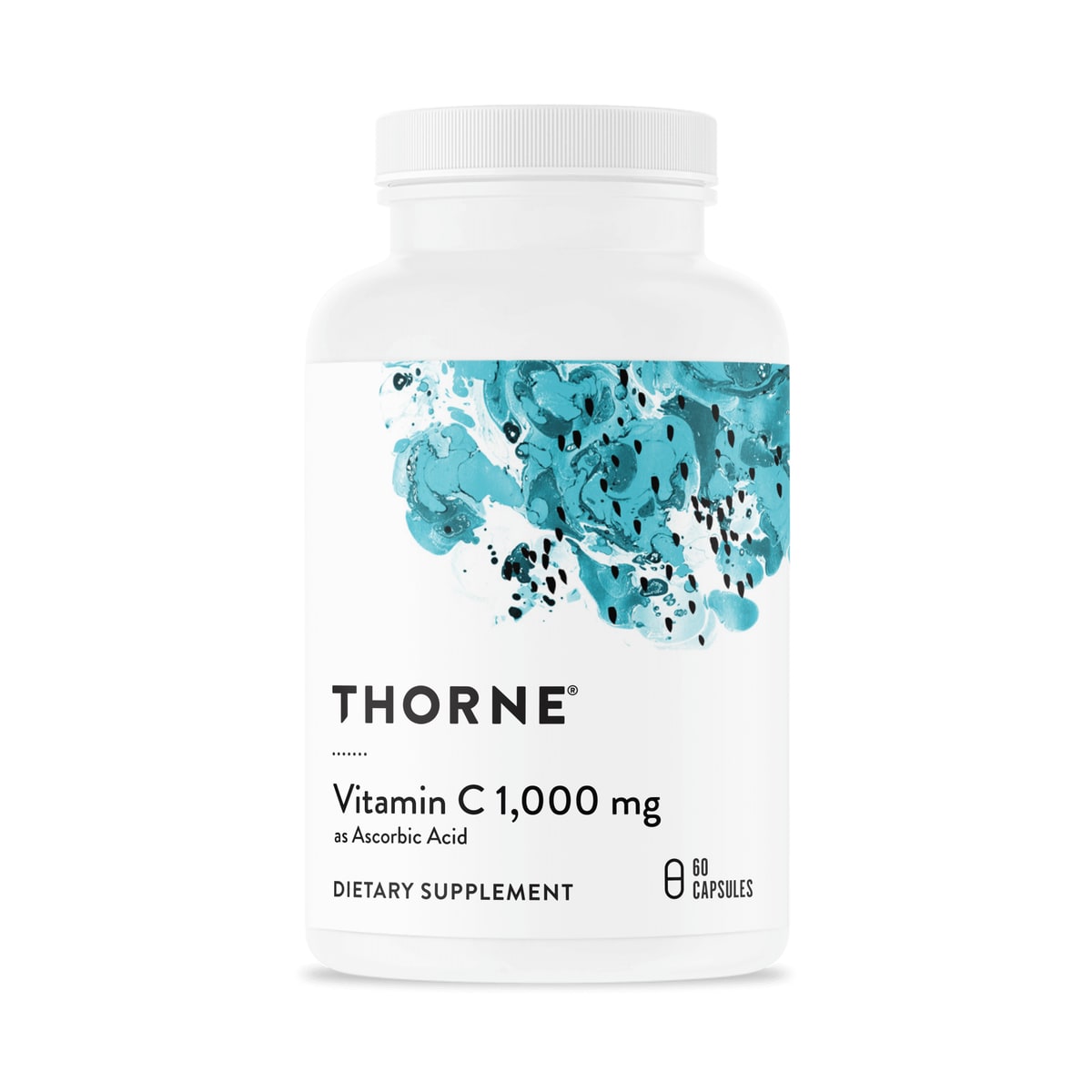
Thorne Vitamin C 1,000 mg
Zoom
Thorne

Thorne Vitamin C 1,000 mg

9/10JellyReviews Score

The best-labelled bottle here after Nature Made, and the reason is the register rather than the brand. NSF/ANSI 173 lists Thorne Vitamin C 1,000 mg by name: one vegetarian capsule, 1,000 mg of ascorbic acid, on a label that adds only calcium laurate, cellulose, and the capsule itself. That standard verifies the label matches the bottle and screens for contaminants. Be clear about what it is not: it is not NSF Certified for Sport, the banned-substance screen a drug-tested athlete needs. It sits second because its verified pack is bundle-only on Amazon, so the honest link is direct to Thorne, one step more than the Nature Made bottle you can buy today.

Pros
1,000 mg of vitamin C as ascorbic acid in one vegetarian capsule, 60 to a bottle
Listed in NSF/ANSI 173, the dietary-supplement standard that verifies the label matches the bottle and screens for contaminants; the register names this exact pack, one capsule at 1,000 mg
A short label: ascorbic acid, calcium laurate, cellulose, and the hypromellose capsule, and nothing else
Cons
NSF/ANSI 173 is not NSF Certified for Sport; it checks identity and contaminants, not banned substances, so it is not the mark a drug-tested athlete needs
On Amazon the standalone bottle is buried under multi-product bundles, so the honest link goes straight to thorne.com
Where to buy
Thorne
Check Price
We may earn a commission from this link.
#3
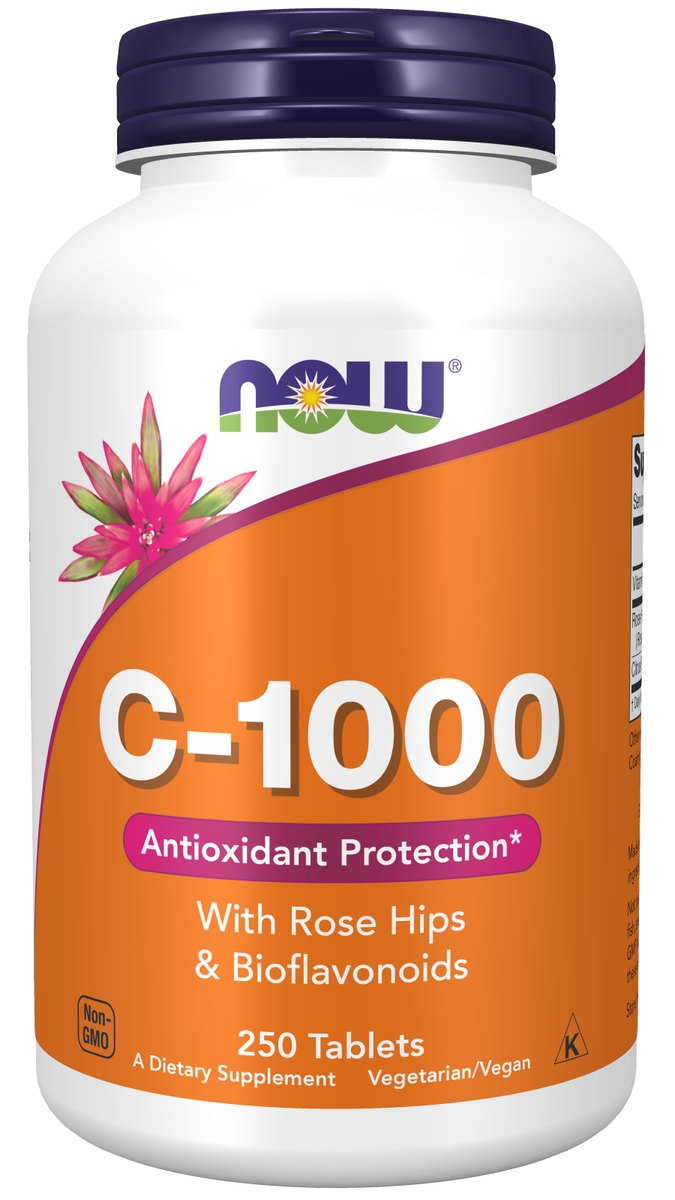
NOW Vitamin C-1,000 with Rose Hips & Bioflavonoids
Zoom
NOW Foods

NOW Vitamin C-1,000 with Rose Hips & Bioflavonoids

8.7/10JellyReviews Score

The pick if you want the rose-hips-and-bioflavonoids formula. It puts 1,000 mg of vitamin C in a tablet with citrus bioflavonoids and rose hips, and the bottle holds 250. Two honest notes. The absorption story usually told about bioflavonoids is not one we could source to the NIH fact sheet or a recent review, so treat the extra ingredients as a preference rather than an upgrade. And NOW sells two almost identical C-1,000 tablets, this one and a sustained-release version, so match the model number, 0687, to be sure of what you are buying. It ranks below the two above it because they are listed in a register at the pack we link and, when we searched USP and NSF/ANSI 173, this one was not.

Pros
1,000 mg of vitamin C per tablet, with rose hips and citrus bioflavonoids in the formula
250 tablets to a bottle, so a single purchase lasts a long time
Cons
The rose hips and bioflavonoids are the selling point, but the popular claim that they meaningfully raise vitamin C absorption is not one we could source to the NIH or a recent review, so buy it for the ingredients, not for an absorption edge
NOW sells two near-identical C-1,000 tablets, this one with rose hips and a separate sustained-release version; check for model 0687 so you get the one you mean
Absent from the USP and NSF/ANSI 173 registers we checked
Where to buy
Amazon
Check Price
We may earn a commission from this link.
#4
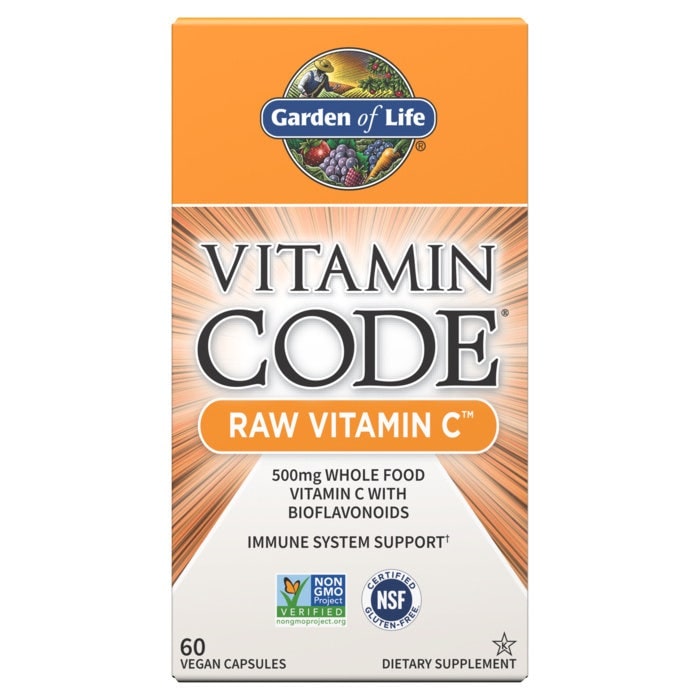
Garden of Life Vitamin Code Raw Vitamin C
Zoom
Garden of Life

Garden of Life Vitamin Code Raw Vitamin C

8.5/10JellyReviews Score

The pick if you specifically want vitamin C from food rather than isolated ascorbic acid. Garden of Life builds it from a raw fruit and vegetable blend in a vegan capsule at 500 mg a serving, with probiotics added. That is the lowest dose of the four, but still well above the 90 mg most adults need, so the old worry about it being under-dosed is misplaced. What you give up against the two products at the top is the register-checked verification they carry: we looked for it in USP and in NSF/ANSI 173 and did not find it, and a raw whole-food blend is harder to pin to an exact isolated dose than a plain ascorbic acid tablet.

Pros
Vitamin C from a raw fruit and vegetable blend rather than isolated ascorbic acid, if you prefer a food-based supplement
A vegan capsule at 500 mg a serving, with a fruit and vegetable blend and added probiotics
Cons
500 mg a serving, the lowest dose of the four here, though still more than five times the RDA, so "low dose" is the wrong worry
A whole-food blend gives you vitamin C wrapped in other plant material rather than a clean, isolated, measurable dose
Absent from the USP and NSF/ANSI 173 registers we checked
Where to buy
Amazon
Check Price
We may earn a commission from this link.
§ 02 · Side-by-side comparison

Compare all 4 at a glance

RankProductBrandScoreBest for
#1Nature Made Extra Strength Vitamin C 1000 mgNature Made9.3EDITOR'S CHOICE
#2Thorne Vitamin C 1,000 mgThorne9NSF/ANSI 173
#3NOW Vitamin C-1,000 with Rose Hips & BioflavonoidsNOW Foods8.7-
#4Garden of Life Vitamin Code Raw Vitamin CGarden of Life8.5-
§ 03 · Buying guide

How to choose the right vitamin c supplement

01The dose does not sort these, and 500 mg is not a low dose

The NIH Office of Dietary Supplements puts the Recommended Dietary Allowance at 90 mg a day for men and 75 mg for women, and sets the Tolerable Upper Intake Level, the most it considers safe to take daily, at 2,000 mg for adults. Every product on this page falls between 500 and 1,000 mg. That is comfortably above the RDA and comfortably below the ceiling, which means the number of milligrams is not what separates them.

It is worth saying plainly because the marketing pushes the other way. A 500 mg product is not "low dose": it is more than five times what most adults need. And vitamin C is water-soluble, so past the point your body uses, the excess leaves in your urine. Buying a bigger number does not buy you more vitamin C in your body, it buys you a more expensive way to make it.

02Ascorbic acid, whole-food, and the rose-hips question

Nature Made and Thorne are plain ascorbic acid, the most studied form and the one clinical trials use. Garden of Life uses vitamin C from a raw fruit and vegetable blend, which some people prefer for being food-based. NOW adds rose hips and citrus bioflavonoids to its ascorbic acid.

You will see two claims made for the fancier forms, and neither survives sourcing. The first is that the bioflavonoids and rose hips meaningfully raise how much vitamin C your body absorbs; we could not find support for that in the NIH vitamin C fact sheet or in a recent systematic review of alternative vitamin C forms, so treat the extra ingredients as a preference, not an absorption upgrade. The second is that a liposomal formula absorbs several times better; none of the products here is liposomal, so it is not a choice on this page anyway. For daily use, plain ascorbic acid is the sensible default, and the reason to pick a food-based or bioflavonoid product is that you want the format, not that it does more.

03What the certification actually checks, and why it is the axis here

When a nutrient is this cheap and this well understood, the useful question is not which form or how many milligrams, it is whether the bottle contains what the label promises. That is what a third-party register checks, and two of these four are listed in one at the exact pack we link. Nature Made is in USP Verified: USP confirms the tablet holds its stated amount, is free of specified contaminants, and dissolves, and the pack we link carries model number 1489, the SKU USP's own listing resolves to. Thorne is in NSF/ANSI 173, which verifies the label matches the bottle and screens for contaminants, and the register names its exact one-capsule, 1,000 mg pack. NOW and Garden of Life we searched for in both registers and did not find.

Two marks that sound similar are not the same, and it is worth knowing which you are getting. NSF/ANSI 173 is a dietary-supplement standard for identity and contaminants. It is not NSF Certified for Sport, which additionally screens for banned substances and is the mark a drug-tested athlete needs. And "GMP certified", which many bottles print, is not a third-party product check at all: it certifies the factory, a baseline every US supplement plant is required to meet. When a page tells you a supplement is verified, ask verified by whom, and against what.

§ 04 · FAQ

Questions about vitamin c supplements

For most people, no. The 2013 Cochrane review by Hemila and Chalker pooled the trials and found that taking vitamin C regularly did not meaningfully reduce how often people in the general community caught a cold: across those trials, with 10,708 participants, the relative risk was 0.97. What it did do was shorten colds a little, by about 8 percent in adults and 14 percent in children. The one group it helped more were people under short bursts of extreme physical stress: across five trials in 598 marathon runners, skiers, and soldiers, it roughly halved the risk of a cold, a relative risk of 0.48. Take it for a modest cut in how long a cold lasts, not to avoid catching one.

The NIH Recommended Dietary Allowance is 90 mg a day for men and 75 mg for women, with an extra 35 mg a day for smokers. The Tolerable Upper Intake Level, the most the NIH considers safe to take daily, is 2,000 mg for adults. Every product on this page sits between 500 and 1,000 mg, above the RDA and well below the ceiling. Vitamin C is water-soluble, so the amount your body cannot use is excreted, and there is little point chasing very high doses: past about 2,000 mg a day you mainly risk diarrhea, nausea, and, in people prone to them, kidney stones.

It can help if you rely on plant sources of iron. Vitamin C improves how well the body absorbs non-heme iron, the form found in plants and in fortified foods, which is why it is often suggested alongside iron-rich plant meals for vegetarians, vegans, and people with low iron. Taking some vitamin C with those meals is a reasonable habit. If you take an iron supplement, keep it away from coffee, tea, and calcium, which work in the other direction.

For daily use, plain ascorbic acid is the well-studied default, and it is the form in clinical trials. Food-based products, like the raw blend on this page, deliver vitamin C in a plant matrix that some people prefer, but they do not deliver more usable vitamin C for the money. Liposomal formulas are marketed for much higher absorption at large doses; none of the products here is liposomal, so it is not a choice you are making on this page, and for an everyday 500 to 1,000 mg dose the case for paying up is thin.

The verdict

Nature Made Extra Strength Vitamin C 1000 mg is our top pick, and the reason is simple: it is the cheapest form of vitamin C there is, plain ascorbic acid, carrying the strongest verification on the page. USP Verified checks that the tablet holds its 1,000 mg and that it dissolves, and the pack we link matches USP's own SKU, model 1489. Thorne is second because NSF/ANSI 173 lists its exact capsule by name, but that pack is bundle-only on Amazon, so you buy it direct from Thorne. If you want rose hips and bioflavonoids, NOW C-1,000 has them; if you want vitamin C from food, Garden of Life uses a raw blend. Do not pay up for a liposomal formula here, because none of these is one, and for a daily dose plain ascorbic acid is the default worth defaulting to.

This page contains affiliate links. We may earn a commission when you click through and make a purchase. This never affects our rankings.