Supplements · Vitamins, minerals, nootropics & protein

The best creatine of 2026

The best creatine, ranked on one thing you can actually check: whether the exact product is listed in a banned-substance certifier's own public database.

Creatine is the same molecule whoever sells it, so the only real question is whether anyone independent has checked what is in the tub. Three of the five below are listed by name and container size in NSF's Certified for Sport database, which is public and searchable. And the finding that surprised us: the cheapest product here carries the same NSF mark as the most expensive. The premium does not buy the certification.

Last updated
July 14, 2026
Ranked on published specs, third-party certifications, and verified buyer reports.
§ 01 — Top 5 Rankings

Our top 5 picks for creatine

As an Amazon Associate I earn from qualifying purchases.

#1
EDITOR'S CHOICE
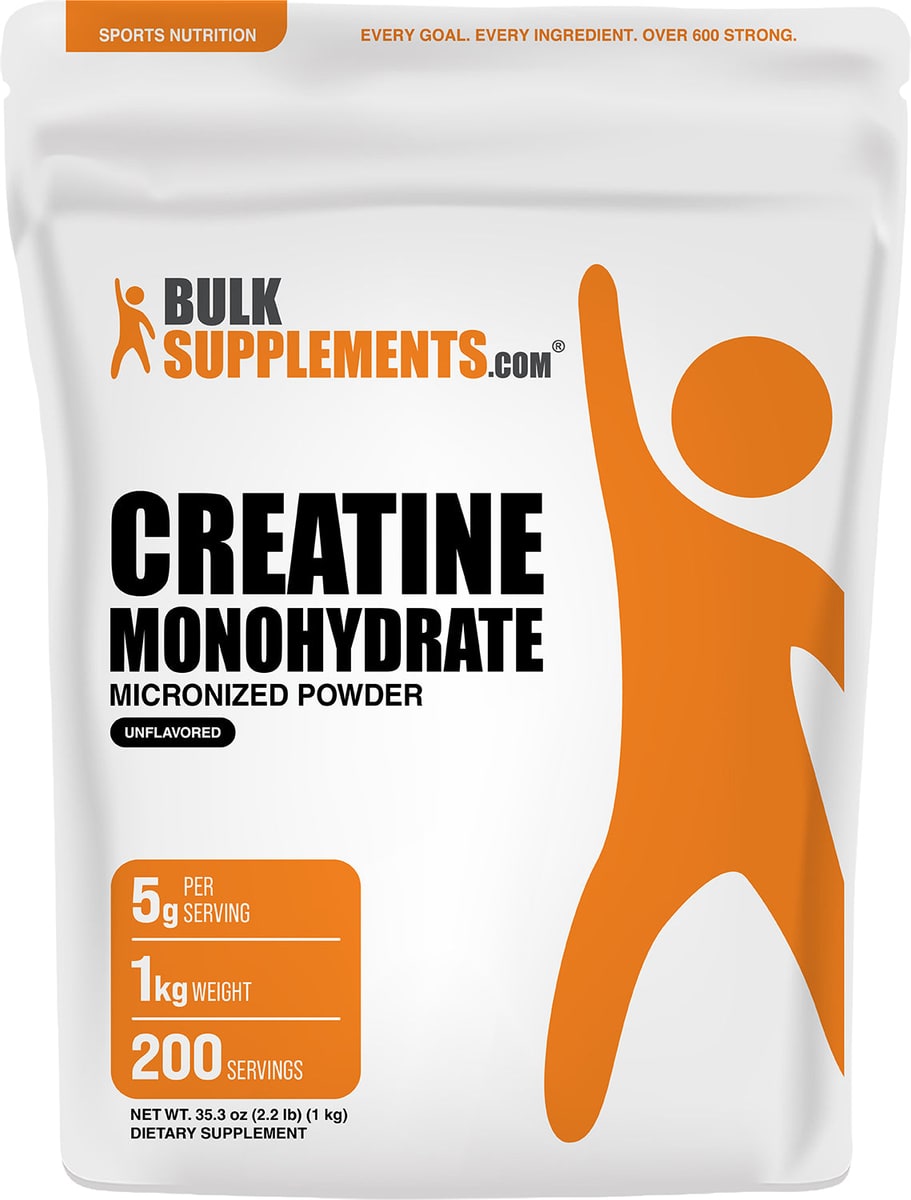
BulkSupplements Creatine Monohydrate, 1 kg
Zoom
BulkSupplements

BulkSupplements Creatine Monohydrate, 1 kg

9.6/10JellyMark Score

This is the whole page in one product. BulkSupplements sells the cheapest creatine of the five here, and NSF's Certified for Sport database lists it by name, by serving size, and by package size, including the 1 kg bag this links to. It is the same NSF programme that certifies the premium brands, and you can confirm it yourself in about a minute at nsfsport.com. The odd part is that BulkSupplements does not say so anywhere on its own Amazon listing. Buy this one and spend the difference on food.

Pros
NSF lists it: "CREATINE MONOHYDRATE POWDER UNFLAVORED", 2 tsp (about 5 g), in package sizes up to the 1 kg one linked here
The cheapest per gram of the five, and by a wide margin
A 1 kg bag is 200 servings at 5 g, so one order lasts most of a year
Micronized, unflavored, and nothing else in it
BulkSupplements states third-party testing and a cGMP facility
Cons
The Amazon listing never mentions NSF. You have to look the product up in NSF's database yourself to learn that it is certified, which is a strange thing for a brand to leave out
It is a resealable bag, not a tub, and 1 kg of powder in a bag is awkward to scoop from
No flavored version of the unflavored SKU, obviously, and it is the flavored SKUs that NSF lists separately
Where to buy
Amazon
Check Price
We may earn a commission from this link.
#2
BEST CERTIFIED TUB
Garden of Life Sport Creatine Monohydrate + Probiotics
Zoom
Garden of Life

Garden of Life Sport Creatine Monohydrate + Probiotics

9.3/10JellyMark Score

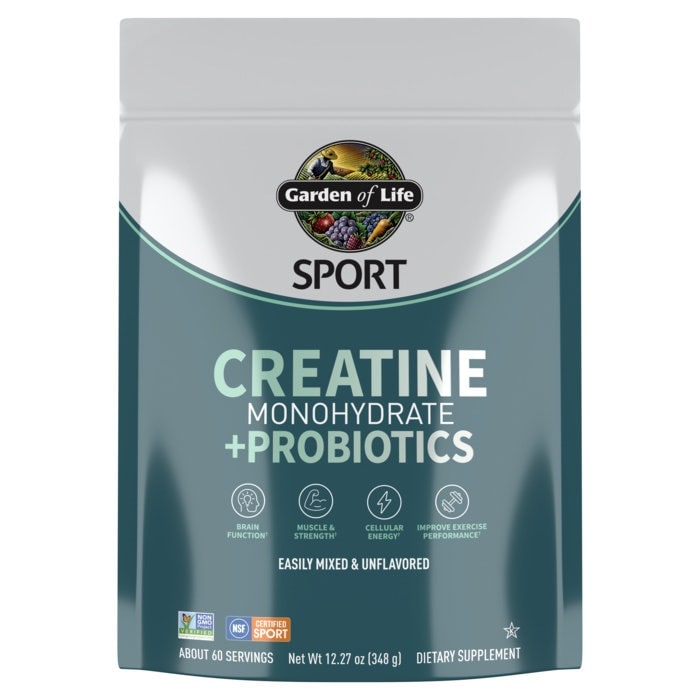
The one to buy if you want the NSF mark printed on the front of the tub rather than looked up in a database. Garden of Life puts 5 g of micronized creatine and 1 billion CFU of Bacillus subtilis DE111 in each of 60 servings, and NSF lists the product at that exact size. DE111 is a spore-forming strain, which is the reason it can sit in a powder at room temperature and still be alive when you drink it. The trade-off is size: you get 348 g here, against 1 kg from the pick above.

Pros
NSF Certified for Sport, listed by name and by the 60-serving size
5 g of micronized creatine per scoop, the standard daily dose, so no arithmetic
Adds 1 billion CFU of Bacillus subtilis DE111, a spore-forming probiotic that survives being sat in a warm tub
NSF records it as dairy-free, soy-free, peanut-free and vegan
Cons
A 348 g tub of 60 servings, which is a third of the BulkSupplements bag for a similar outlay
You are paying for a probiotic you did not necessarily come here for. If you already take one, this is a duplicate
Only 290 ratings, so there is far less owner feedback to read than on the other four
Where to buy
Amazon
Check Price
We may earn a commission from this link.
#3
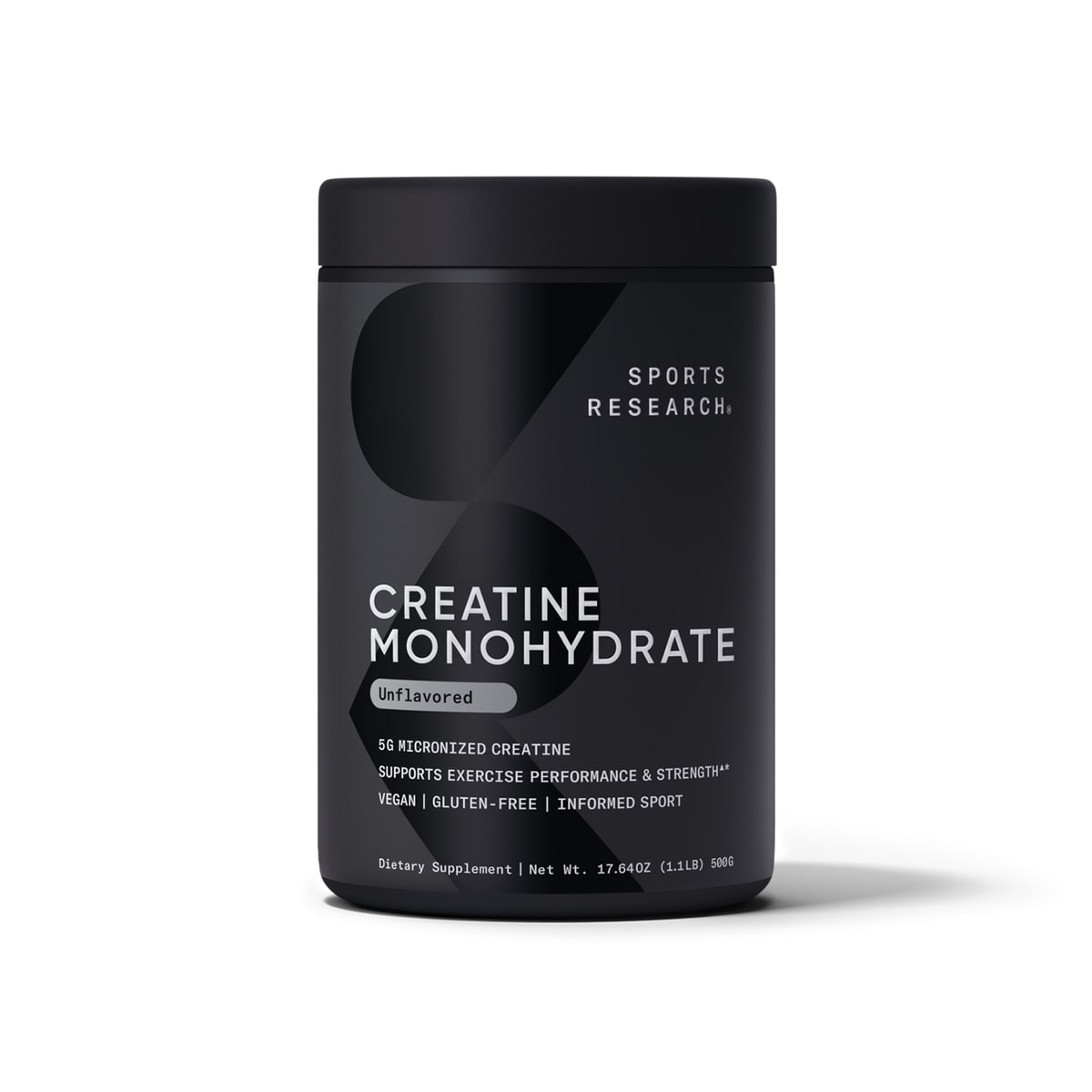
Sports Research Creatine Monohydrate, 17.64 oz
Zoom
Sports Research

Sports Research Creatine Monohydrate, 17.64 oz

9.1/10JellyMark Score

A good middle size, and a useful lesson in reading a label. Sports Research says on this listing that the powder is Informed Sport Tested and Non-GMO Project Verified, and 500 g at 5 g a serving is a sensible amount to buy. But it also says "NSF Gluten-Free" in the same breath, and that is not NSF Certified for Sport. It tells you the powder has no gluten in it. It tells you nothing about banned substances. If the NSF mark is what you are buying, check which NSF you are looking at.

Pros
Informed Sport Tested, in Sports Research's own words on this listing, and NSF lists a Sports Research creatine too
500 g at 5 g a serving, so it sits between the 1 kg bag and the 250 g tubs
Micronized, unflavored, and made without soy, gluten or artificial ingredients
Non-GMO Project Verified
Cons
Read the label carefully: it advertises "NSF Gluten-Free", which is a completely different NSF programme from NSF Certified for Sport. Same three letters, different check
The listing quotes serving counts for several other products in the same table, so the number you see may not be this tub's
Informed Sport and NSF Certified for Sport are both credible, but they are not the same standard, and the brand leads with the weaker-sounding one
Where to buy
Amazon
Check Price
We may earn a commission from this link.
#4
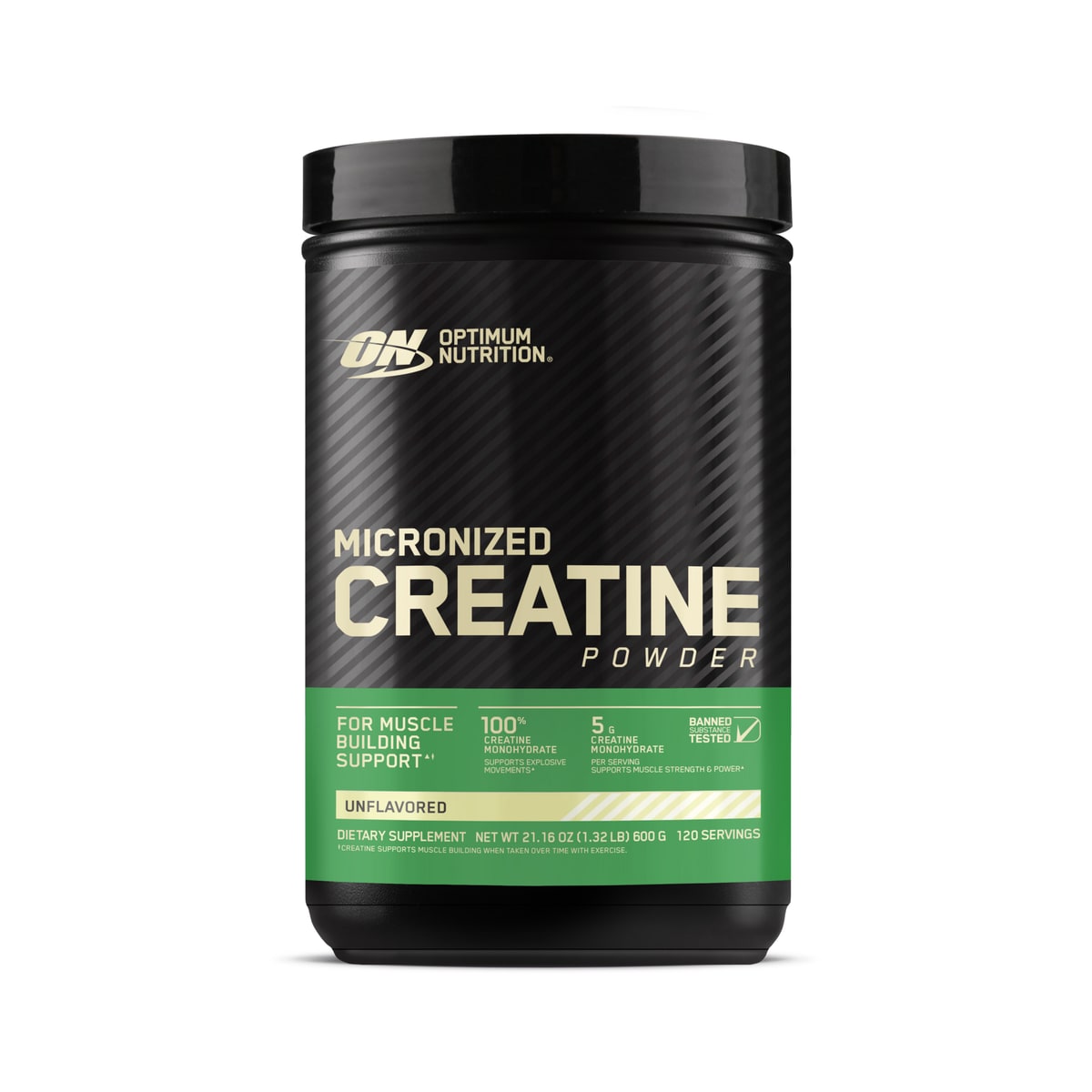
Optimum Nutrition Micronized Creatine Monohydrate
Zoom
Optimum Nutrition

Optimum Nutrition Micronized Creatine Monohydrate

9/10JellyMark Score

The safe, boring, extremely popular choice, and there is nothing wrong with it. Optimum Nutrition puts 5 g of micronized creatine in each of 60 servings and states on the listing that the product is part of the Informed Choice programme. That is a genuine banned-substance check and it is worth having. It is just not NSF Certified for Sport, which is the stricter mark that three other products on this page carry, one of which costs less per gram. Buy this if you want the name you already know.

Pros
Optimum Nutrition's own listing says the powder is "part of the informed choice program which is regularly tested for banned substances"
5 g per serving, 60 servings, micronized, unflavored
By far the most owner feedback of the five, at over 56,000 ratings
Amazon's Overall Pick in this category
Cons
Informed Choice, not NSF Certified for Sport. Informed Choice tests batches that reach the market; it is a real programme, but it is not the one the other three hold
A 300 g tub, so the smallest amount of powder of the five except the Bucked Up
The brand recognition is doing some of the work here. The creatine inside is the same as the bag at number one
Where to buy
Amazon
Check Price
We may earn a commission from this link.
#5
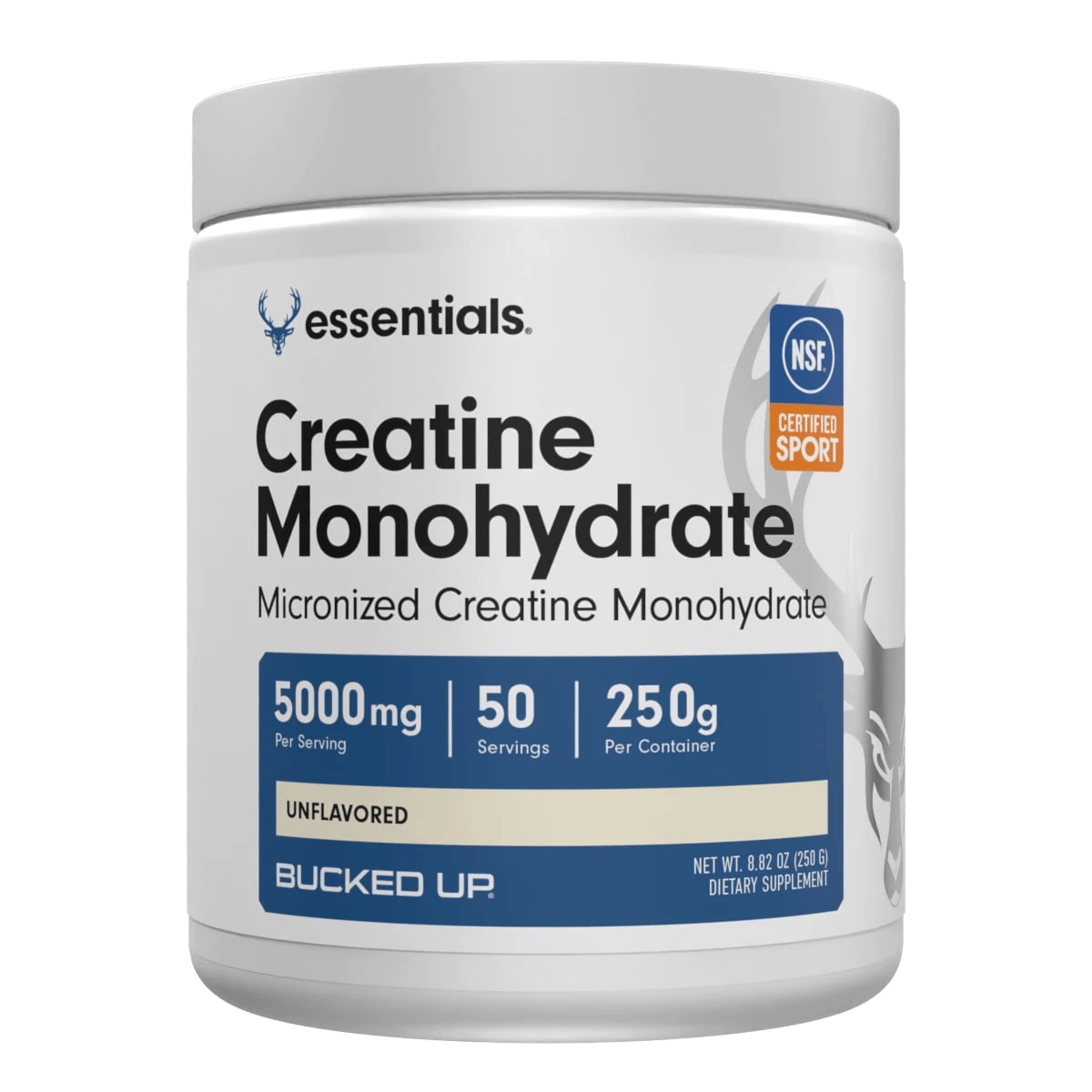
Bucked Up Essentials Creatine Monohydrate, 250 g
Zoom
Bucked Up

Bucked Up Essentials Creatine Monohydrate, 250 g

8.8/10JellyMark Score

Buy this one to try creatine, not to live on it. NSF certifies Bucked Up's Essentials creatine at a 5 g scoop in a 250 g container, and this is that container, so the mark is real and you can check it. At 50 servings it is the smallest commitment on the page, which is the point: seven weeks is long enough to find out whether the powder mixes for you and whether you notice anything. If you do, the 1 kg bag at number one is the same molecule with the same certification for a fraction of the price per gram.

Pros
NSF Certified for Sport. NSF lists "Essentials Creatine Monohydrate" at 1 scoop (5 g) in a 250 g container, which is exactly this one
The smallest tub here, which makes it the cheapest way to find out whether you get on with creatine
Micronized and unflavored, and the brand states a GMP-compliant, FDA-registered facility
Gluten-free and non-GMO, per both Bucked Up and the NSF record
Cons
The highest cost per gram of the powders here. 250 g is 50 servings, a quarter of what the number one gives you
The Amazon title calls it "Pure Micronized Creatine Monohydrate" while NSF certifies it as "Essentials Creatine Monohydrate". They are the same product, and the 250 g size is how you confirm it, but the name mismatch is an unnecessary way to lose a buyer
Bucked Up's own listing claims third-party testing but does not print the NSF mark either
Where to buy
Amazon
Check Price
We may earn a commission from this link.
§ 02 — Side-by-side comparison

Compare all 5 at a glance

RankProductBrandScoreBest for
#1BulkSupplements Creatine Monohydrate, 1 kgBulkSupplements9.6EDITOR'S CHOICE
#2Garden of Life Sport Creatine Monohydrate + ProbioticsGarden of Life9.3BEST CERTIFIED TUB
#3Sports Research Creatine Monohydrate, 17.64 ozSports Research9.1
#4Optimum Nutrition Micronized Creatine MonohydrateOptimum Nutrition9
#5Bucked Up Essentials Creatine Monohydrate, 250 gBucked Up8.8
§ 03 — Buying guide

How to choose the right creatine

01Read this first: the certification does not cost extra

The usual advice is that you pay a premium for a banned-substance certification, and that if you are not drug tested you can skip it. Check the database and that turns out to be false. NSF publishes every product it certifies at nsfsport.com, searchable by brand, and the cheapest creatine on this page is in there: BulkSupplements is listed as "CREATINE MONOHYDRATE POWDER UNFLAVORED", at a serving of 2 tsp (about 5 g), in package sizes up to the 1 kg bag. The premium brands are in there too. They are all in the same list.

So the certification is not what you are paying for. Search the database before you pay more for a mark you can get for less, and search it by the container size as well as the brand, because a brand can have one product certified and another not.

02NSF Certified for Sport is not the only thing called NSF

NSF runs several programmes and they check completely different things. NSF Certified for Sport screens each batch against a banned-substance list and confirms the label matches the contents. NSF Gluten-Free confirms there is no gluten in it. A product can carry the second and not the first, and the packaging will say "NSF" either way.

Sports Research, at number three, is a live example: its listing says "NSF Gluten-Free" and "Informed Sport Tested" in the same sentence. Both are true and neither is NSF Certified for Sport. Informed Choice and Informed Sport are credible programmes run by LGC and are worth having. They are simply not the same standard, and a brand that holds the weaker one will still print three reassuring letters on the tub.

03Buy monohydrate, and ignore every other form

The International Society of Sports Nutrition's position stand (Kreider and colleagues, Journal of the International Society of Sports Nutrition, 2017) states that "creatine monohydrate is the most extensively studied and clinically effective form of creatine for use in nutritional supplements in terms of muscle uptake and ability to increase high-intensity exercise capacity." The same paper notes that over 1,000 studies have been run on it since it became popular in the early 1990s.

On the newer forms, a 2021 review in the same journal (Antonio and colleagues) puts it plainly: other forms of creatine are not superior to creatine monohydrate. HCl, ethyl ester, nitrate and the rest cost more and are studied less. All five products on this page are monohydrate, and all five are micronized, which only means the particles are ground finer so the powder dissolves instead of settling at the bottom of the glass.

§ 04 — FAQ

Questions about creatine

Take 3 to 5 g a day, every day, and you do not need a loading phase. The ISSN position stand (Kreider and colleagues, 2017) describes two routes to the same place: about 5 g four times a day for 5 to 7 days fills your muscles quickly, or 3 g a day fills them gradually over roughly 28 days. Same destination, different speed. If you are not in a hurry, skip the loading phase and the stomach upset that sometimes comes with it. Timing within the day does not matter. Consistency does.

There is one study behind this, and it did not measure hair. Van der Merwe, Brooks and Myburgh (Clinical Journal of Sport Medicine, 2009) gave 20 college-aged rugby players creatine and found that DHT, a hormone associated with male pattern baldness, rose 56% after a 7-day loading phase and stayed about 40% above baseline through 14 days of maintenance. Testosterone itself did not change. That is a hormone measurement in 20 people, not a finding about hair, and no study since has shown creatine causing hair loss. If male pattern baldness runs in your family, that is a conversation for a dermatologist, not a reason to avoid creatine.

No. Cycling has no basis in the research and never did. The ISSN position stand concludes that supplementation is safe and well tolerated in healthy people at doses of up to 30 g a day for as long as 5 years, which is far more than the 3 to 5 g anyone here is recommending. There is no evidence that your body stops responding, and no reason to stop except cost.

It will make you hold some water, and that is the mechanism working rather than a side effect. The ISSN position stand reports a short-term fluid retention of roughly 0.5 to 1.0 litres. Creatine is osmotically active and pulls water into muscle cells, which is a large part of why muscles look fuller on it. If you feel uncomfortable, split the dose across the day and drink more water rather than less.

The verdict

BulkSupplements Creatine Monohydrate is the pick, and the reason is not that it is cheap. It is that it is cheap and NSF Certified for Sport at the same time. NSF lists it by name, by serving and by package size, the 1 kg bag included, and you can confirm that yourself at nsfsport.com in a minute. If you want that mark printed on the tub instead of looked up, the Garden of Life is the same certification in a 60-serving container. If you just want to try creatine without committing to a kilogram of it, the Bucked Up is 50 servings and holds the same NSF certification. There is no version of this page where you need to pay a premium to get your creatine checked.

This page contains affiliate links. We may earn a commission when you click through and make a purchase — this never affects our rankings.