#1
EDITOR'S CHOICE
Zoom
Thorne
Thorne Magnesium Bisglycinate
9.4/10JellyReviews Score
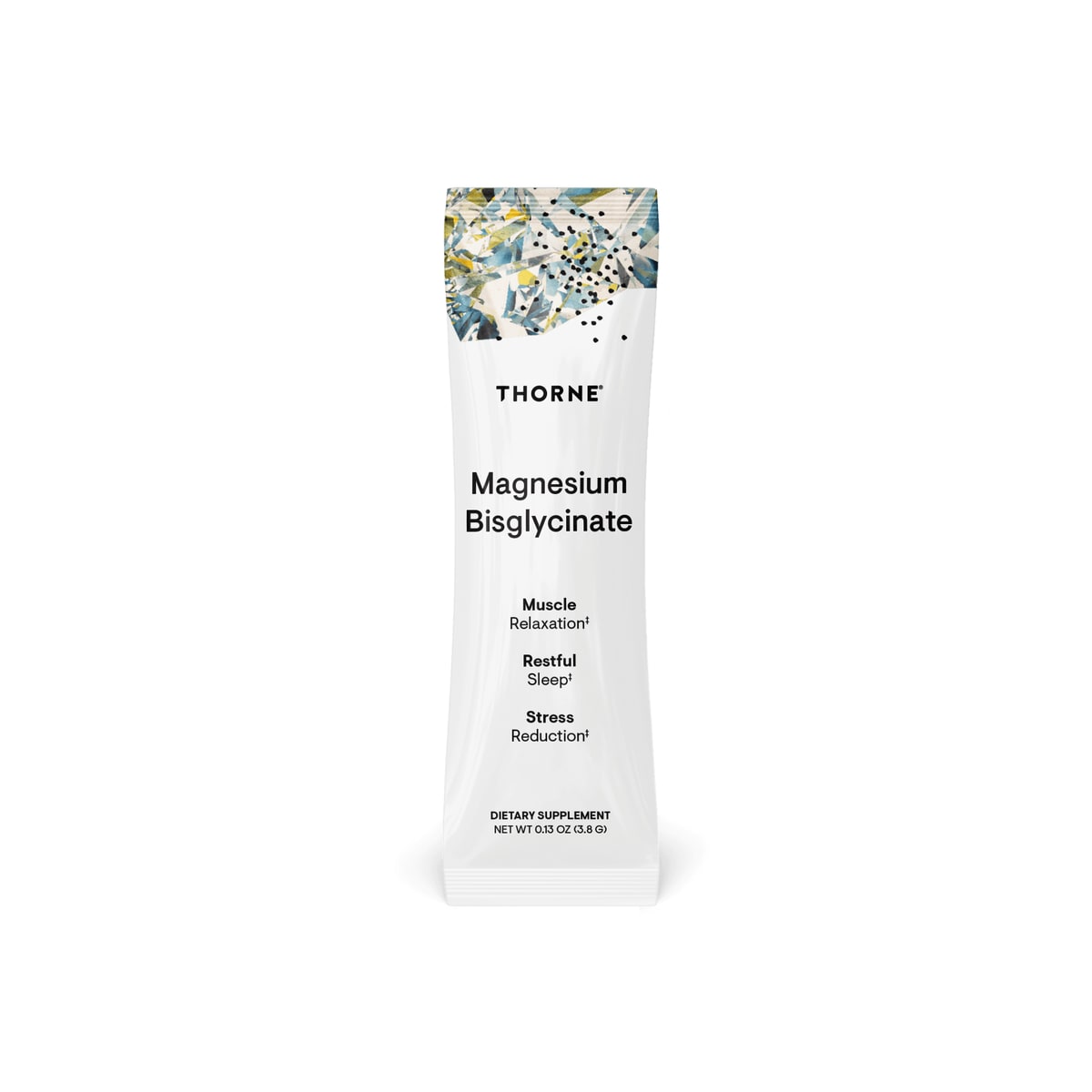
Thorne answers both questions with a yes, and the register is specific enough to prove it. NSF Certified for Sport does not just list the brand: it names the pack, a 30-count box of 3.8g sticks sold in the United States, which is exactly what you get when you click through. That mark means an independent lab opened this box and screened it against a banned-substance list, which only BulkSupplements here also carries, and BulkSupplements fails the second question. The panel backs it up: magnesium bisglycinate, 200mg elemental per stick, no oxide, and an other-ingredients line of two items, citric acid and monk fruit. The trade-off is the stick itself. You mix it into water, and you take 200mg or you take none.
Pros
NSF Certified for Sport, and the register lists this exact pack: 30 sticks, 114g
The panel lists magnesium bisglycinate, with no oxide
200mg elemental magnesium per stick
Two other ingredients, citric acid and monk fruit, and that is the whole list
Cons
Single-serve sticks, so the dose is fixed at 200mg and you cannot take half
Needs mixing into water, which is slower than swallowing a capsule
30 sticks per box, so a box is 30 days