HomeCategoriesSupplementsVitamin D3 Supplements
Supplements · Vitamins, minerals, nootropics & protein

The best vitamin d3 supplements of 2026

The best vitamin D3 supplements, ranked on the dose in one capsule, what else is in the bottle, and which of these packs a certifier will actually vouch for.

Four of these five put 5,000 IU in a single capsule. The NIH sets the tolerable upper intake level for adults at 4,000 IU a day and the RDA at 600, so that gap is the first thing on this page. We read each maker's own supplement facts panel, then checked every product against the registers that publish: NSF Certified for Sport, USP Verified, and Nutrasource. Three of the five suspend the D3 in an oil and two are dry capsules, so the carrier cannot rank them.

Last updated
July 16, 2026
How we rank: published specs, third-party certifications, and what verified buyers report.
§ 01 · Top 5 Rankings

Our top 5 picks for vitamin d3 supplements

As an Amazon Associate I earn from qualifying purchases.

#1
EDITOR'S CHOICE
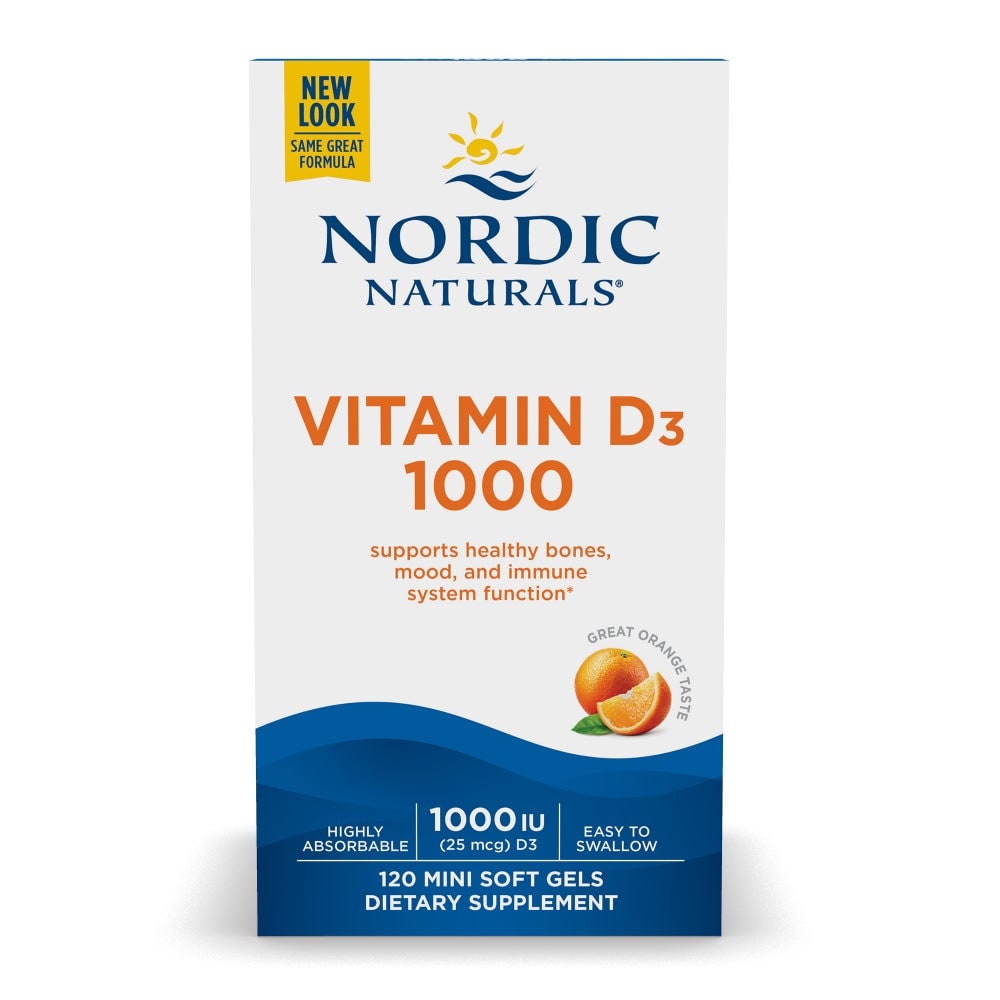
Nordic Naturals Vitamin D3 1000
Zoom
Nordic Naturals

Nordic Naturals Vitamin D3 1000

9.2/10JellyReviews Score

The one to buy if you have not had a blood test, which is most people reading this. It is the only product on this page whose label dose sits inside the NIH range: 1,000 IU per soft gel against an RDA of 600 and a tolerable upper intake level of 4,000. The other four put 5,000 IU in a single serving. Nordic Naturals puts the D3 in organic extra virgin olive oil, and Nutrasource lists this product as IGEN Non-GMO Tested, which is a genuine third-party check, just of GMO content rather than of what the NSF register tests. Be clear about what it is not: Nordic Naturals has nine NSF Certified for Sport listings, and two of them are a vitamin D3, its Vitamin D3 Gummies Sport. This soft gel is not among them. It ranks first for fitting the dose to the reader, not for out-certifying Thorne.
Pros
At 1,000 IU per soft gel it is the only product here you can take daily and stay inside the NIH tolerable upper intake level of 4,000 IU
Nutrasource lists this exact product as IGEN Non-GMO Tested, which is a real third-party test, though of GMO content rather than of purity or potency
The D3 sits in organic extra virgin olive oil, so the fat comes in the soft gel rather than from your meal
120 soft gels at one per serving, which is four months from a bottle at the label dose
Cons
If a blood test has shown you are genuinely deficient, 1,000 IU is a slow way back and your doctor will probably want more
Nordic Naturals holds nine NSF Certified for Sport listings, two of which are a vitamin D3 gummy, and this soft gel is not one of them
A gelatin soft gel, so it does not suit a vegetarian diet the way the two capsules here do
Where to buy
Amazon
Check Price
We may earn a commission from this link.
#2
NSF CERTIFIED
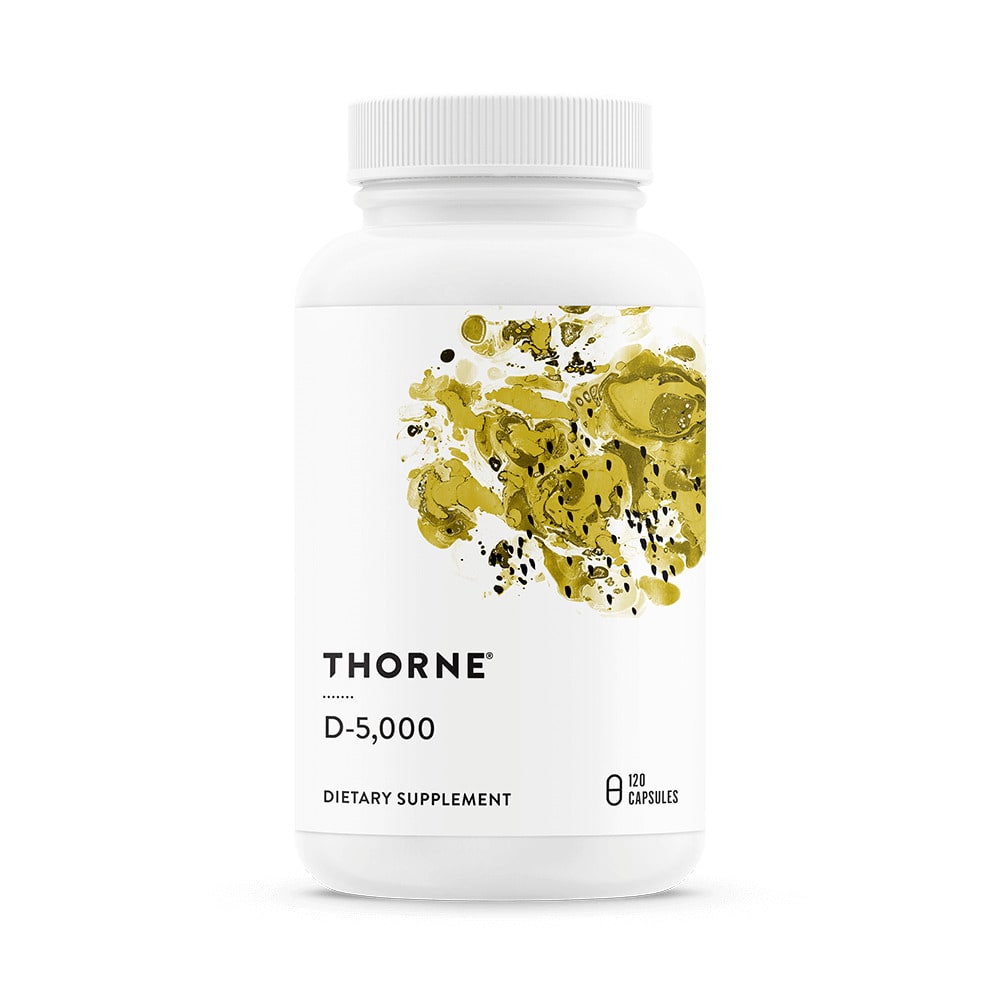
Thorne Vitamin D-5,000
Zoom
Thorne

Thorne Vitamin D-5,000

9/10JellyReviews Score

The best-verified product on the page, and the reason to buy it is the register rather than anything Thorne says. NSF lists Thorne D-5,000 by name: capsules, 60 or 120 count, one capsule per serving, with 40 lot numbers attached. That means an independent body has tested what is in these bottles against what the label claims, batch by batch. Nothing else here can show you that. What keeps it off the top spot is the dose. 125 mcg is 5,000 IU, and the NIH caps daily intake at 4,000 for adults, so this is a capsule to take because a blood test told you to and not because a label did. Buy it if you are correcting a measured deficiency, or if you are drug-tested and need the banned-substance screen.

Pros
The only product here whose exact pack is in the NSF Certified for Sport register: capsules, 60 or 120 count, one capsule per serving
NSF publishes 40 lot numbers against that listing, so the certification tracks batches rather than sitting on the brand name
A vegetarian hypromellose capsule and no carrier oil, with four more items behind it on the label: leucine, microcrystalline cellulose, silicon dioxide and vitamin E
125 mcg (5,000 IU) in one capsule, which is the dose to reach for once a blood test has told you to
Cons
That 5,000 IU is 25 percent above the NIH tolerable upper intake level for adults, so it is a correction dose and not a daily default
A dry capsule with no oil carrier, unlike the three soft gels here, so the fat these vitamins need has to come from your meal
No vitamin K2 in the bottle, though nothing else on this page has any either
Where to buy
Amazon
Check Price
We may earn a commission from this link.
#3
MOST PER BOTTLE
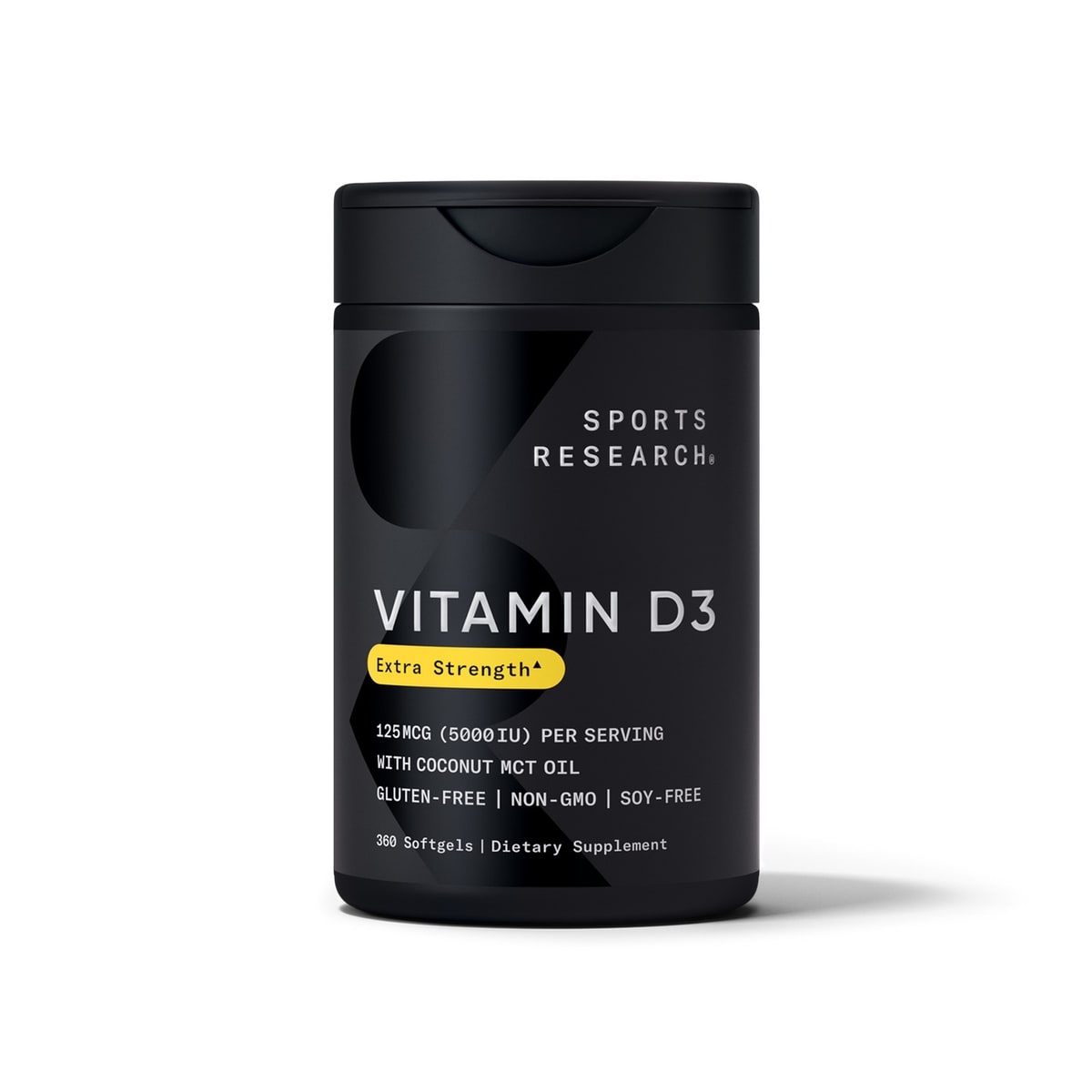
Sports Research Vitamin D3 5000 IU with Coconut MCT Oil
Zoom
Sports Research

Sports Research Vitamin D3 5000 IU with Coconut MCT Oil

8.7/10JellyReviews Score

The high-dose pick with the deepest bottle: 360 soft gels against the 120 count packs we link for the other four, and Nutrasource lists it as IGEN Non-GMO Tested, the same mark Nordic Naturals carries. Sports Research also puts an absorption claim on its coconut MCT carrier in writing, and that is worth saying plainly rather than repeating: the claim is asterisked to the FDA disclaimer, and we could not find a human trial that compares coconut MCT to olive oil for D3. Two things to weigh. At 5,000 IU a soft gel this is above the NIH ceiling of 4,000, so 360 of them is close to a year of a dose you should be taking on a test result. And the brand does hold an NSF Certified for Sport listing, but it is for creatine.

Pros
360 soft gels, the most in any bottle we link here, against the 120 count packs we link for the other four
Nutrasource lists it as IGEN Non-GMO Tested, the same third-party mark Nordic Naturals carries
The D3 is suspended in coconut MCT oil, and Sports Research puts an absorption claim on that carrier in writing
Cons
5,000 IU per soft gel, above the NIH ceiling of 4,000, so a 360 count bottle is close to a year of a dose you should not be guessing at
That absorption claim is asterisked to the FDA disclaimer, and we could not find a human trial comparing these carrier oils for D3
The soft gel is gelatin and the label declares tree nuts, because coconut is one
Its NSF Certified for Sport listing is for creatine, not for this or any Sports Research vitamin D
Where to buy
Amazon
Check Price
We may earn a commission from this link.
#4
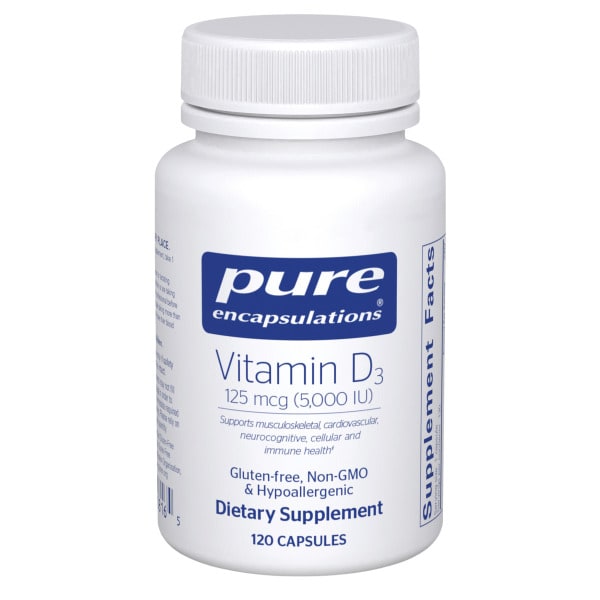
Pure Encapsulations Vitamin D3 125 mcg (5,000 IU)
Zoom
Pure Encapsulations

Pure Encapsulations Vitamin D3 125 mcg (5,000 IU)

8.5/10JellyReviews Score

The pick for a sensitive gut. Beyond the vitamin D3 there are two other ingredients, cellulose and the vegetarian capsule, and Pure Encapsulations publishes a FREE FROM list that runs to wheat, soy, dairy, eggs, tree nuts, peanuts, sesame, gluten and magnesium stearate. Three counts are sold, 60, 120 and 250. What it does not have is outside verification. We looked for Pure Encapsulations in NSF Certified for Sport under three spellings, in USP Verified, and in Nutrasource, and found nothing in any of them. It is also a dry capsule with no oil, so Pure Encapsulations tells you to take it with a meal. At 5,000 IU it is above the NIH ceiling, like everything here except the Nordic Naturals.

Pros
Beyond the D3 the label runs to two items, hypoallergenic plant fiber (cellulose) and the vegetarian capsule itself, the shortest of the two dry capsules here
Pure Encapsulations prints a FREE FROM list covering wheat, soy, dairy, eggs, tree nuts, peanuts, sesame, gluten and magnesium stearate
Sold in 60, 120 and 250 capsule counts, so you can match the bottle to how long you plan to take it
Cons
5,000 IU per capsule, above the NIH tolerable upper intake level of 4,000 for adults
Absent from every register we checked: NSF Certified for Sport, USP Verified, and Nutrasource
A dry capsule with no oil, and the maker's own directions say to take it with a meal
Where to buy
Amazon
Check Price
We may earn a commission from this link.
#5
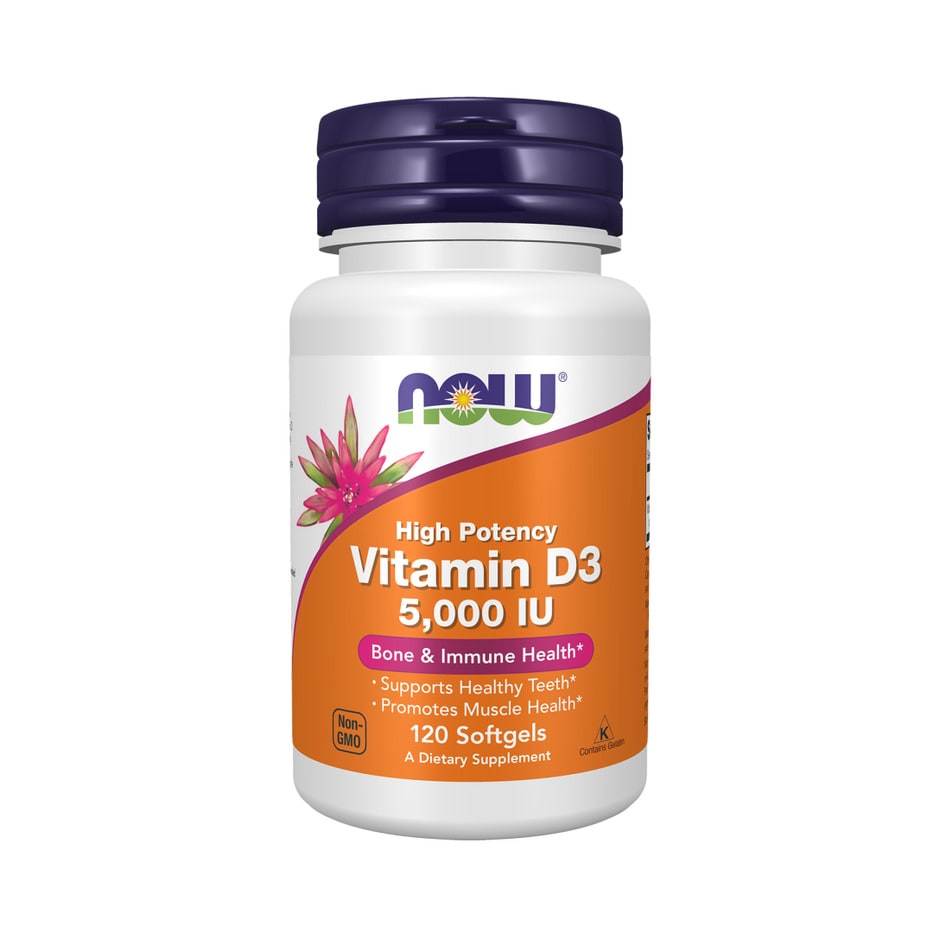
NOW Foods Vitamin D-3 5,000 IU
Zoom
NOW Foods

NOW Foods Vitamin D-3 5,000 IU

8.3/10JellyReviews Score

The bottle to buy if you are not sure yet how long you will be taking it, and one of the two here with no register entry behind it. NOW sells this in 30, 120, 180 and 240 counts, which matters when the sensible thing to do is buy a small bottle and re-test. The soft gel is soy free and NOW lists it as Halal and Kosher. The D3 comes from lanolin and sits in extra virgin olive oil with safflower oil. Where it falls behind is proof. NOW is not in NSF Certified for Sport under any spelling we tried, and not in USP Verified. The Intertek GMP badge on its page certifies the plant it was made in, which every US supplement facility is required to meet anyway. At 5,000 IU it sits above the NIH ceiling.

Pros
Sold in 30, 120, 180 and 240 soft gels, so you can buy a small bottle, re-test, and decide from the number
The label reads soy free, and NOW lists the product as Halal and Kosher
The D3 is from lanolin, in extra virgin olive oil with safflower oil, so the fat is in the soft gel
Cons
5,000 IU per soft gel, above the NIH tolerable upper intake level of 4,000 for adults
Absent from NSF Certified for Sport and from USP Verified: the Intertek GMP mark it prints certifies the factory, not this product
A bovine gelatin soft gel, so it does not suit a vegetarian diet
Where to buy
Amazon
Check Price
We may earn a commission from this link.
§ 02 · Side-by-side comparison

Compare all 5 at a glance

RankProductBrandScoreBest for
#1Nordic Naturals Vitamin D3 1000Nordic Naturals9.2EDITOR'S CHOICE
#2Thorne Vitamin D-5,000Thorne9NSF CERTIFIED
#3Sports Research Vitamin D3 5000 IU with Coconut MCT OilSports Research8.7MOST PER BOTTLE
#4Pure Encapsulations Vitamin D3 125 mcg (5,000 IU)Pure Encapsulations8.5-
#5NOW Foods Vitamin D-3 5,000 IUNOW Foods8.3-
§ 03 · Buying guide

How to choose the right vitamin d3 supplement

01Four of these five are above the NIH ceiling in a single capsule

The NIH Office of Dietary Supplements puts the Recommended Dietary Allowance for adults aged 19 to 70 at 15 mcg (600 IU) a day, and 20 mcg (800 IU) from 71. It sets the Tolerable Upper Intake Level, the most it considers safe to take daily without medical supervision, at 100 mcg (4,000 IU) for everyone over 8. Four of the five products on this page deliver 125 mcg (5,000 IU) in a single serving.

That does not make them dangerous, and doctors do prescribe 5,000 IU. It makes them the wrong default. A 5,000 IU capsule is a dose you take because a blood test told you to, not because a label did. Only Nordic Naturals Vitamin D3 1000 sits inside the NIH range, which is why it is first here even though Thorne holds the better certification. The NIH is blunt about which direction the risk runs: it says vitamin D toxicity is almost always the result of excessive intake through supplements.

02D3 beats D2, but check which number you are being sold

All five products here are D3 (cholecalciferol), so the D3 versus D2 question does not separate them. It matters when you are looking at a product that is not on this page, and the figure everyone quotes is 87 percent. That number is real, and it comes from Heaney and colleagues in the Journal of Clinical Endocrinology and Metabolism in 2011: a single-blind randomized trial in 33 adults dosed at 50,000 IU a week for 12 weeks. Nobody takes these products that way.

For daily dosing, which is how every product here is taken, the figure comes from a larger and more recent pool: 40 percent. A systematic review and meta-analysis in Advances in Nutrition pooled 12 daily-dosed comparisons and found the D2 group 10.39 nmol/L, or 40 percent, below the D3 group, and found that body mass index changes the answer. Either way, buy D3. Just know that the 87 percent belongs to a weekly bolus and not to your morning soft gel.

03Three of these five suspend the D3 in an oil. It should not decide your purchase

Thorne and Pure Encapsulations are dry capsules. Pure keeps its label to two items past the vitamin D3, cellulose and the vegetarian capsule; Thorne runs to five, adding leucine, silicon dioxide and vitamin E. Nordic Naturals uses organic extra virgin olive oil, NOW Foods extra virgin olive oil with safflower oil, and Sports Research coconut MCT. A ranking built on the carrier oil would have to leave two of the five off the axis altogether, which is why this page does not use it.

Sports Research puts an absorption claim on its carrier in writing, and it is asterisked to the FDA disclaimer. We could not find a human trial comparing these oils for D3. What we did find runs the other way: Dawson-Hughes and colleagues randomized 62 adults to no meal, a high-fat meal, or a low-fat meal alongside a 50,000 IU dose (Journal of Bone and Mineral Research, 2013). The low-fat group absorbed the most in the first 12 hours, and at 30 and 90 days the blood levels of all three groups were not significantly different. Take your D3 with food. Do not pay extra for the oil it is suspended in.

04Three of these brands hold NSF certifications. One holds it on the pack we link.

NSF Certified for Sport publishes a searchable register, and the certificate is pinned to a pack rather than to a company. Thorne D-5,000 is in it by name: capsules, 60 or 120 count, one capsule per serving, with 40 lot numbers listed against the entry. An independent body has checked what is in that bottle against what the label says. It is the strongest verifiable fact on this page, and it is the reason Thorne is second rather than fourth.

The other four do not have it, and Nordic Naturals shows why that sentence has to name a pack. It has nine NSF listings, and two of them are a vitamin D3: its Vitamin D3 Gummies Sport. The soft gel we link is not among them. Same brand, same vitamin, two formats, and the register covers one of them. Sports Research has one, and it is creatine. NOW Foods and Pure Encapsulations are not in the register at all, under any spelling we tried. None of the five brands appears in USP Verified, whose register lists 16 brands. Nordic Naturals Vitamin D3 1000 and Sports Research Vitamin D3 5000 are both listed by Nutrasource as IGEN Non-GMO Tested, which is a real third-party test of GMO content and tells you nothing about purity or potency. Read the mark, then read what it measures.

§ 04 · FAQ

Questions about vitamin d3 supplements

The NIH Recommended Dietary Allowance is 15 mcg (600 IU) a day for adults aged 19 to 70, and 20 mcg (800 IU) from 71. The NIH also sets a Tolerable Upper Intake Level of 100 mcg (4,000 IU) a day for everyone over 8, which is the most it considers safe without medical supervision. Four of the five products on this page put 5,000 IU in a single capsule, which is above that line. If you have not had a 25(OH)D blood test, the 1,000 IU option is the one that keeps you inside the NIH range. If you have had one, follow the number your doctor gives you rather than the number on the label.

The NIH says the Food and Nutrition Board considers 50 nmol/L (20 ng/mL) or more sufficient for most people, and that the risk of deficiency rises below 30 nmol/L (12 ng/mL). You will see higher targets quoted around the internet, often 40 to 60 ng/mL. Those do not come from the NIH, and the NIH is explicit that the serum concentrations associated with vitamin D deficiency have not been definitively identified. A 25(OH)D test is the only way to know where you actually are, and it is the thing to do before you buy any of the 5,000 IU products here.

Some of it, and how much depends on you. The NIH says the season, the time of day, the length of the day, cloud cover, and the melanin content of your skin all affect how much ultraviolet radiation reaches you and how much vitamin D your skin makes. It does not publish a minutes-per-week figure, and any page that gives you one is going beyond the evidence. That variability is the reason a blood test beats a rule of thumb.

Yes, and the NIH is specific about the route: it says vitamin D toxicity is almost always the result of excessive intake through supplements. Toxicity can cause hypercalcemia, hypercalciuria and high serum 25(OH)D, and in extreme cases the NIH lists renal failure, calcification of soft tissues, cardiac arrhythmias and death. The Tolerable Upper Intake Level runs from 25 to 100 mcg (1,000 to 4,000 IU) depending on age. The NIH also notes that taking calcium alongside vitamin D may raise the risk of certain adverse effects, and that vitamin D supplements can interact with orlistat, statins, steroids and thiazide diuretics.

The verdict

Nordic Naturals Vitamin D3 1000 is our top pick, because it is the only product here whose label dose fits a reader who has not had a blood test: 1,000 IU per soft gel, against an NIH RDA of 600 and a ceiling of 4,000. Thorne D-5,000 is the better-verified product and it is second: NSF lists that exact pack, 60 or 120 capsules, with 40 lot numbers behind it, and nothing else on this page can show you that. It is second because 5,000 IU is a dose for a measured deficiency, not a daily default. If you want the deepest bottle, Sports Research gives you 360 soft gels. Get a 25(OH)D test before you buy anything at 5,000 IU, and if you want K2 in the same bottle, none of these has it: see our vitamin D3 and K2 rankings instead.

This page contains affiliate links. We may earn a commission when you click through and make a purchase. This never affects our rankings.