Is Thorne Worth the Premium? What You Can Check Yourself
Thorne is our top pick in four of the five categories where it appears, and fourth in the fifth. Here is what that judgment rests on, including a 2014 FDA recall the brand does not mention, and the one question that decides whether the premium is worth paying.
The short version
Thorne appears in five of our categories. It is our number one pick in four of them: vitamin D3, multivitamins, vitamin C, and magnesium glycinate. In the fifth, vitamin D3 with K2, we rank it fourth, and that one matters more than the four wins, because it is the same rule cutting the other way.
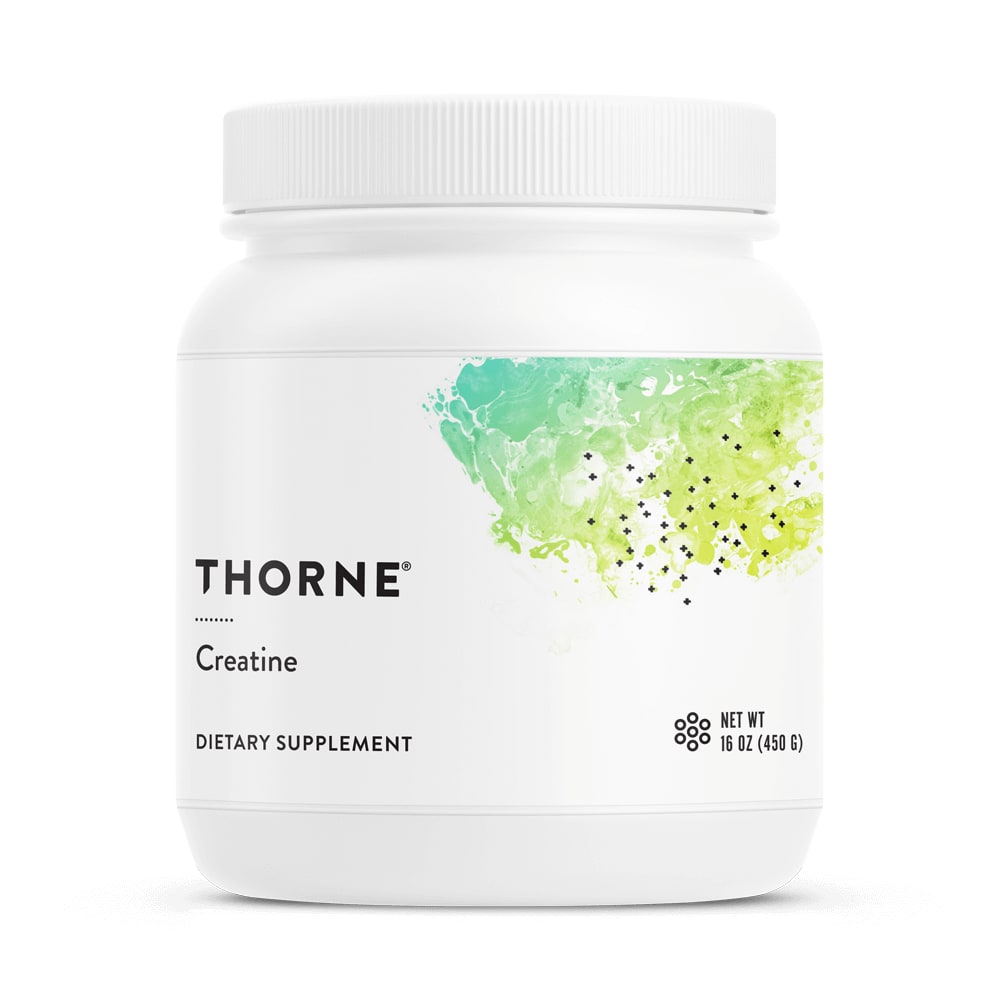
It is also not on our creatine page at all, and the reason is not quality. Thorne reaches Amazon only through an authorized reseller, and every Thorne creatine listing we could find there was a multi-product bundle rather than the tub. We rank what a reader can actually buy.
Thorne is not cheap. Whether that is worth paying comes down to one question, and it is not the question the rest of the internet asks. We get to it below.
Start at the register, but do not stop there
Search Thorne in NSF's Certified for Sport database and the range is real: Creatine, whey protein isolate, magnesium bisglycinate, Basic Nutrients 2/Day, Super EPA, Basic Prenatal, Multi-Vitamin Elite. You do not have to trust us on any of it, and you should not. NSF publishes the list, NSF is not paid by us, and the search takes about ten seconds.
Do the search properly, though, because there is a trap in it that will cost you two thirds of the answer. NSF files this company under two different brand names: "Thorne" and "Thorne®", with the registered-trademark symbol. They are separate entries in the brand menu and they return separate results. In July 2026 the plain "Thorne" search returned 22 listings and the "Thorne®" search returned 38. Some products sit under both spellings, so the two numbers do not simply add up, and neither one on its own is the range. Search only the obvious spelling and you will see a third of the range and conclude the rest is uncertified. Basic Nutrients 2/Day and Basic Prenatal appear under "Thorne®" only. Super EPA and the whey isolate appear under "Thorne" only.
That is not a Thorne problem, it is a register problem, and it is the reason to search a product name rather than a brand when you actually want an answer. The numbers move, so count them yourself.
The supplement aisle runs on trust, and trust is cheap to claim. A third-party certification is the only part of a supplement label that somebody else had to agree to.
They make it themselves, and the filing says how
Plenty of supplement brands do not make anything: they design a label, hire a contract manufacturer, and buy a batch. We have not counted how many, so we will not tell you it is most of them. What we can tell you is what Thorne files. It runs its own production, in a 272,000 square foot facility in Summerville, South Carolina, with formulation, ingredients, production and quality control kept in house. Its filing puts it this way: "Our facility has been cGMP certified through NSF since 2015." That comes from Thorne's last annual report as a public company, filed in 2023 before L Catterton took it private, so it is accurate to that date and no later.
Read that sentence carefully, though, because it is the one every supplement brand hopes you will misread. A GMP audit is an audit of the plant, not a test of what comes out of it. NSF is explicit that a company holding only GMP registration may not put the NSF mark on a product label. Good manufacturing practice is also not an achievement: 21 CFR 111 makes it the law for everyone who makes a supplement in this country. So the plant audit is worth something, and it is not the thing worth paying for. The Certified for Sport listings above are, because those are the ones where somebody opened the bottle.
One correction while we are here. Thorne runs the plant, but it leases the buildings. "Owns its factory" is a line you will read on other sites. It is not what the filing says.
What the Mayo Clinic relationship actually is
Almost every write-up of Thorne mentions Mayo Clinic, and most of them leave you thinking Mayo endorses the products. It does not.
What the filings show is a clinical study agreement dating to 2014, under which Thorne runs trials with Mayo. The money runs one way. Thorne recorded 0.8 million dollars in each of 2021 and 2022 for licensing and research agreements with Mayo Clinic. Thorne pays Mayo, not the reverse.
That still counts for something. Very few supplement companies fund clinical trials at all, and running one means risking a published result you did not want. But it is a research relationship Thorne buys, and calling it an endorsement would be a lie.
The logos work the same way. Thorne sponsors the UFC, USA Rugby, Penske Racing, Roush Fenway Racing, the Human Powered Health cycling team, and the U.S. Army World Class Athlete Program. Sponsorship means Thorne pays them. That is marketing, and marketing is not evidence. The NSF listing is evidence. The distance between those two things is where most of this industry lives.
The 2014 recall, which Thorne does not mention
In June 2014 Thorne voluntarily recalled two products, Captomer and Captomer-250. The FDA classified it Class II and terminated the recall that October. You will not find it anywhere on Thorne's website. You will find it in the FDA's own enforcement database under recall numbers D-1383-2014 and D-1384-2014.
What it was: both products were labeled as sourced from DMSA, a chelating agent that is the active ingredient in an approved prescription drug. Selling that as a dietary supplement made them unapproved new drugs. The FDA said at the time that it had also received several adverse event reports connected to them.
What it was not: a purity or contamination failure. Thorne returns no matches at all in the FDA's food enforcement database, which is where a contaminated supplement recall would sit. And it predates the Summerville plant, which broke ground in 2017: the recall belongs to a company that made its products somewhere else.
We are telling you this because a brand page that finds nothing wrong is an advert. That recall is the one thing on Thorne's record worth knowing about. We went and read it. Having read it, we still rank them first.
What the premium actually buys
Here is the sentence every other write-up of this brand reaches for: the premium buys the certification. It is wrong, and our own creatine page is where it dies. On that page the cheapest product carries the same NSF Certified for Sport mark as the most expensive one. The certification is not the premium. It is the floor, and it is a cheap floor.
What the premium buys is the formulation, and only in the categories where the formulation is a real choice. That distinction is the whole post, so here is the proof, and every leg of it is on a label you can read in a shop.
Magnesium is the clearest case. NSF certifies that a label tells the truth. It does not certify that the formula is good, and those are two independent things. The cheapest magnesium on our page is NSF certified and its own label reads "Magnesium Glycinate and Magnesium Oxide". That label is accurate. It accurately says there is oxide in there. Thorne's panel says bisglycinate and nothing else. Both products passed the same register. Only one of them made the choice you were shopping for.
The same thing decides our multivitamin page. Thorne uses L-5-MTHF rather than folic acid, methylcobalamin rather than cyanocobalamin, and bisglycinate chelates rather than oxides. Every one of those is printed on the panel, none of them is a certification, and any of them is checkable in the time it takes to turn the bottle around.
Now the test that makes this an argument rather than a compliment. Creatine monohydrate is one molecule. There is no form to choose, no chelate, no isomer, nothing a formulator can be clever about. So there is nothing for a premium to buy, and the cheap certified tub is our number one pick. That is not an oversight on our creatine page. That is the rule working.
And a rule has to be able to lose, or it is not a rule. On our vitamin D3 with K2 page Thorne ranks fourth, because it leads with MK-4, a form of K2 that clears the blood far faster than the MK-7 the products above it use. Same company, same plant, same register, same discipline. It made a formulation choice, we think that choice is wrong, and it costs Thorne three places. If the premium bought the certification, that could not happen.
Who should not buy Thorne
Ask one question before you pay: does this category have a formulation choice in it? For magnesium it does, and the panel gives it away, because it either says bisglycinate or it quietly also says oxide. For a multivitamin it does, in the form of every B vitamin on the label. For creatine monohydrate it does not, and there we point you at the cheap certified tub without hesitating. Paying a premium in a category with nothing to choose is paying for a decision nobody had to make.
If you are drug tested, by the NCAA, a professional league, or the military, it is not a close call. Supplements are not cleared by the FDA before they go on sale, contamination with banned substances is a documented problem in this category, and one failed test costs you a season. For you the certification is not an extra on top of the product. It is the product.
Where to buy it
Thorne sells direct at thorne.com. It is on Amazon too, with one detail worth knowing: Thorne is not the seller of record there. Its own annual report says buyers reach the brand on Amazon through an authorized reseller. If lot freshness, handling, or having recourse to the manufacturer matters to you, the direct channel is the only one Thorne controls end to end.